

Footwork on the Reformer is an essential exercise in Pilates, known for its numerous benefits such as warming up, stretching, and strengthening the ankles. Whether you’re an athlete, fitness instructor, or Pilates enthusiast, incorporating footwork into your routine can enhance your overall physical wellness.
What is Footwork on the Reformer?
Footwork on the Reformer mimics a squat-like movement but is performed while lying down. This exercise involves pressing away from the foot bar and extending your legs, then bending them to return to the starting position. It’s designed to help you perfect your alignment and engage various muscle groups, offering support to those who might struggle with standing squats.
Key Benefits
Step-by-Step Guide to Footwork on the Reformer
-
Set Up the Reformer
Adjust Spring Tension: Use 2 red springs and 1 blue spring for optimal resistance. Adjust according to your Reformer model.
Position the Foot Bar: Ensure the foot bar is up, ready for use.
-
Get into Position
Lie Down: Rest your back flat on the carriage, feet on the foot bar, and head on the headrest.
Align Your Body: Ensure ankles and knees are aligned with hips for proper form.
-
Perform the Exercise
Press Away: Engage your core and press through your feet to extend your legs fully.
Return to Start: Bend your knees, bringing the carriage back to the starting position. Focus on keeping your pelvis stable.
-
Variation and Intensity
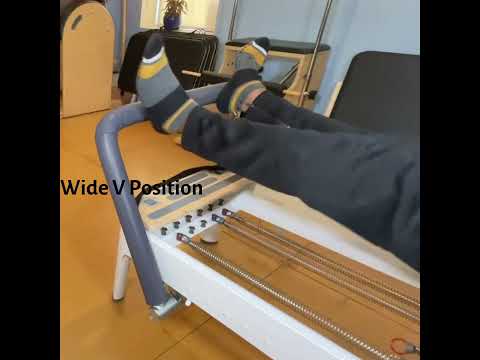
Foot positionsBalls of Feet: engage your calves more Heels: target the gluteal muscles V Position: work your inner thighsSpring adjustmentsIncrease resistance for strength training. Reduce resistance to focus on core stabilization.
Common Mistakes to Avoid
Too Many Springs: Adding excessive springs can lead to improper form and potential injury.
Pelvic Movement: Keep your pelvis stable to avoid undue stress on the lower back.
Visual Cues
Imagine your sacrum is heavy, filled with sand, anchoring you to the carriage.
Visualize your thigh bones gently tipping into the hip sockets like water pouring into a bowl.
Conclusion
With practice, footwork on the Reformer can become a fundamental part of your Pilates routine, offering incredible benefits for strength, flexibility, and alignment. Every individual has unique needs, so adjust the exercise to suit your personal fitness level and goals. For personalized guidance, consider booking a session with a professional instructor who can support your fitness journey.
Remember, wellness and growth come with patience and dedication. Keep moving forward!